‘Weaving Dreams’: New exhibition in Milstein highlights legacy of Black students at Barnard
Updated: Nov 13, 2025
Milstein’s latest exhibition features Dr. Kim F. Hall’s textiles and quilted artworks, highlighting the experience of Black women in academia. The display opened on October 3 alongside a performance in collaboration with SLMDances dance collective.

The exhibition is currently open for all students in the Milstein Center and features various pieces of art.
Photo by Vernon Demir/The Barnard Bulletin
October 11, 2025
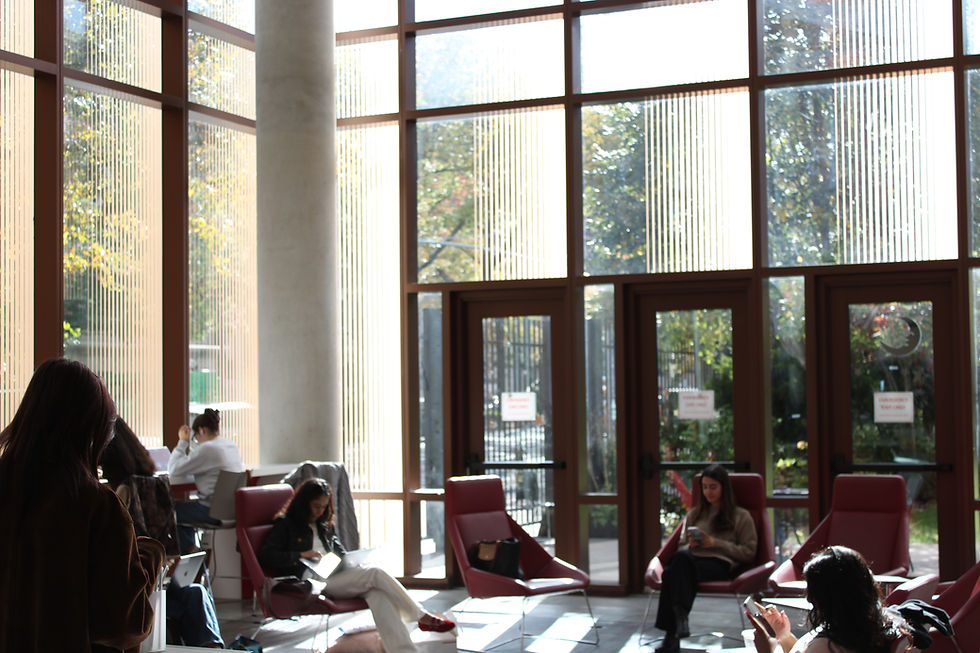
Milstein’s lobby and second floor have once again been transformed into Barnard’s own art gallery, making it impossible to search for a study spot without getting distracted by the installation of detailed and colorful quilts. The new exhibition explores themes of personal expression and communal artistic practice, centering the stories of Black women in academia. Inspired by a quote from Zora Neale Hurston (BC '28), the exhibition’s title “Weaving Dreams” explores the “business of dream weaving that we call writing,” specifically highlighting the importance of creation and community for Black students at Barnard.
Curated by Dr. Kim F. Hall, a Barnard professor in both the English and Africana Studies departments, “Weaving Dreams” showcases a variety of textile artworks crafted by Hall and her mother, Vera. Vera’s pieces are visual histories of slavery and freedom, and the wall text for the piece “Civil War: Devotion to Freedom” notes that Vera used “her skills as an educator and teacher” to “help teach largely unknown histories of Black people.” Hall’s work builds on her mother’s art, citing her inspiration from the bond she developed with her mother over the quilting practice and her commitment to storytelling.

Photo by Vernon Demir/The Barnard Bulletin
The exhibition is separated into three thematic sections: “Our Ancestors’ Dreams,” “Homeplace Dreams,” and “Dreaming Other Worlds.” The quilts in the first section contemplate ideas of personal history, lineage, and legacy, and the final section becomes a manifestation of escapism with its vivid depictions of fantastical “other worlds.” The centerpiece of the entire collection is Hall’s “Harriet, Our Spy,” a large, red quilt featuring a portrait and a visual biography of Harriet Tubman, which is a part of “Our Ancestors’ Dreams” and hangs directly in front of the entrance to Milstein.
The exhibition also features pieces by Barnard alumna Carter Watts (BC ’25). Among Watts’ personal works, one piece is a culmination of her community quilting project, “The Story We Sew.” This project was developed through various quilting workshops in which members of the Barnard, Morningside Heights, and West Harlem communities gathered at the Design Center and collaborated on tiles for a collective quilt related to questions of community, dreams, and resistance.
In addition to the display of textiles, the exhibition highlights the work of artist Tomisin Fasosin (BC ’25), founder of “Black Style at Barnard,” an archive of Black student style on campus. Fasosin’s piece, “100 Years of Black Students and Style at Barnard,” features four dresses, each representing the Barnard alumni referenced in the exhibition: writer Zora Neale Hurston (BC 1928), playwright and poet Ntozake Shange (BC ’70), dancer and activist Sydnie L. Mosley (BC ’07), and recent graduate and Design Center Fellow Khepera Lyons-Clark (BC ’24). This piece builds upon the exhibition's central “weaving” motif through fashion design, emphasizing the potential of style to be a vehicle for personal expression.
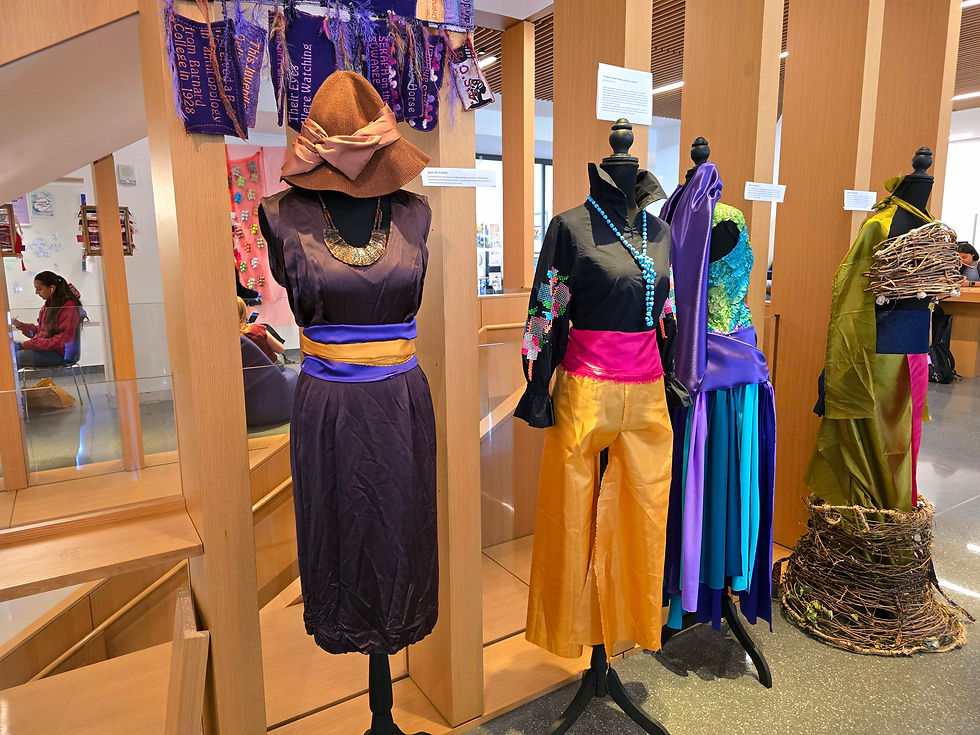
Photo by Vernon Demir/The Barnard Bulletin
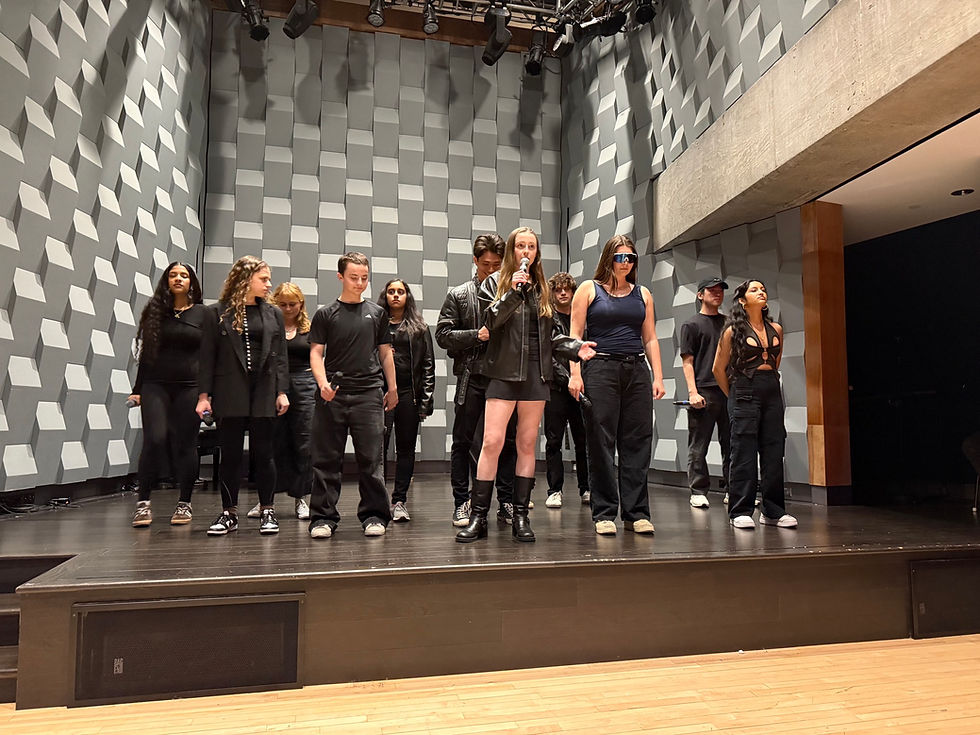
To celebrate the new installation, students, faculty, and supporters gathered in the Milstein lobby on October 3 for a live performance, conceptualized by longtime collaborator of Hall, Sydnie L. Mosley (BC ’07). Mosley is the founder of Sydnie L. Mosley Dances (SLMDances), a dance collective focused on dance activism. The performance in Milstein consisted of excerpts from SLMDances’ project “PURPLE: A Ritual in Nine Spells,” a performance piece rooted in concepts of sisterhood, communal movement, and storytelling. The Milstein lobby was almost unrecognizable, since the area directly next to the Sushi Spot — cleverly disguised behind folding screens and draped fabric — was converted into a performance space. Amidst the rows of chairs, there was a percussion set, piano, and various tables filled with props.
Performer Dyane Harvey opened the production with the assertion, “this is not a show.” It is true that what followed was not merely spectating, but an evening of thorough interaction and physical participation. Throughout the performance, the dancers insisted that audience members dance with them, either by physically imitating the dances on stage or conceptualizing their own motifs to share with the group. Inspired by the props, each dance move served as a symbol for concepts such as earthly elements, folklore, and the dreams of authors. Some audience members were assigned props, such as books, baskets of spices, and candles, to handle in their seats. One audience member yielding a basket of fruit was prompted to conceptualize a dance move associated with the “divine feminine.” By the end of the performance, each audience member actively participated in a recap of every dance movement from the evening, resulting in a communal dance composition. The performance was followed by a Q-and-A session with Hall and Harvey, moderated by Amy Shoshana Blumberg, the associate director of “PURPLE.”
One section of the performance emphasized the legacy of the Black community at Barnard and brought notable Black Barnard alumni into the spotlight, naming women such as the established librarian and archivist, Jean Blackwell Hutson (BC ’35), and Judge Sheila Abdus-Salaam (BC ’74), who was the first Black woman to serve on the New York Court of Appeals. This year marks 100 years since Zora Neale Hurston became the first Black student at Barnard, which the College is commemorating with “The Zora Neale Hurston Centennial” and “100 Years of Black Students at Barnard.” Both the exhibition and performance are timely, calling attention to the past century of Black students’ experiences at Barnard.
While Barnard students notice the quilts passing through the lobby or gaze upwards at them as they study on the second floor of Milstein, students should interact deeply with the works’ stories, honoring the legacy of Barnard alumni who have paved the way for future students to come and sustain the practice of communal artistic creation and engagement.