Revisiting ‘Araya’: The legacy of filmmaker Margot Benacerraf
Columbia’s Lenfest Center hosted a screening of Benacerraf’s 1959 film and a conversation about her contributions to Venezuelan film culture.

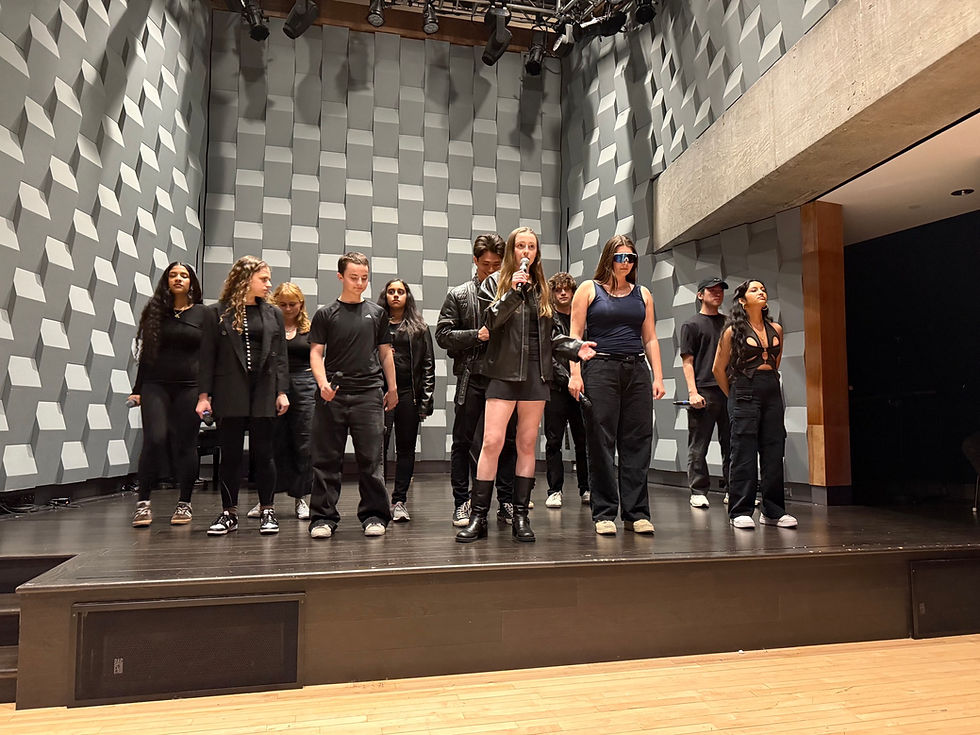
Photo provided by Elizabeth Ramírez-Soto/Columbia School of the Arts
October 22, 2026 at 4:39 p.m.
On October 2, Columbia University's Lenfest Center for the Arts screened Venezuelan filmmaker Margot Benacerraf’s 1959 film “Araya” as part of its faculty film spotlight series. Introduced by Columbia's Associate Professor of Film and Media Studies Elizabeth Ramírez-Soto, the screening celebrated the Benacerraf's centennial and showcased "Araya" through 35mm print from Milestone Films’ 2009 restoration project.
Born in Venezuela, Benacerraf came to New York in 1949 after winning a theatre-writing scholarship sponsored by Columbia University. While introducing the film, Ramírez-Soto highlighted Benacerraf’s influence beyond directing.
“She lived a long and productive life devoted to cinema,” Ramírez-Soto explained, describing Benacerraf's film as showcasing “invisible but crucial labor in order to develop and sustain film culture in her homeland, Venezuela.”
Shot in black and white, “Araya” follows three families of salt workers, known as “salineros,” on Venezuela’s Araya Peninsula, where salt extraction has shaped daily life for more than 500 years. The film depicts the grueling labor of harvesting, trading salt, and fishing, as well as domestic traditions from the region.
During the post-screening discussion, Leticia Berrizbeitia Añez, a NYU doctoral candidate in Cinema Studies who researched Benacerraf’s films and archival materials, similarly commented that the filmmaker used “a lot of poetic license” when illustrating the lives of the salineros in this narrative. Rather than simply recording daily life, Benacerraf used scripted scenes, cast unrelated people as family members, and carefully staged workers’ interactions and day-to-day routines to construct a rhythmic portrayal of the peninsular life.
Benacerraf also prioritized preserving the community’s cultural details. For example, the soundtrack incorporated recordings made in Venezuela, including “polos,” a Venezuelan musical form. The film also depicts fishing and pottery, practices that Berrizbeitia Añez connected to the Araya Peninsula’s Indigenous history and cultural traditions.
“I know that Venezuelan authenticity was important for her to convey,” Berrizbeitia Añez said. “She insisted on keeping these elements that you could even say have some ethnographic value to them.”
The coexistence of the film’s poetic nature and goal of cultural preservation complicates the film as purely artistic or documentary. Benacerraf presents the salineros’ lives through deliberate choices in composition and sound. Close-ups of hands and feet at work and of people carrying baskets of salt on their heads emphasize the demands of physical labor, while wide shots pan across the barren peninsula to show the harsh environment they live in. However, the workers have relatively little chance to speak, leading some critics to question how Benacerraf’s artistic choices shape the audience’s understanding of the salineros’ lives.
Benacerraf’s background offers insight into her poetic approach to filmmaking. By winning the Columbia University-sponsored scholarship, Benacerraf was offered the opportunity for her to study dramatic writing in New York, where she was introduced to new cinematic circles and soon pivoted to filmmaking.
According to Berrizbeitia Añez, Benacerraf’s contributions include founding the National Cinematheque of Venezuela and establishing the Fundación Audiovisual Margot Benacerraf, which continues to safeguard her materials. The foundation preserves Benacerraf’s personal legacy as well as her film exhibition and education in Venezuela. Its collection includes Benacerraf’s writing, photography, and unfinished projects.
Preserving this legacy has its own challenges. The speakers described the foundation’s collection as difficult to navigate, and its long-term future is uncertain.
“On the archival end of this, what we have is an expert who knows how to navigate all these boxes and then a bunch of boxes that are piled up, and they’re not catalogued,” Berrizbeitia Añez said. “It is a big question mark. What is going to happen to all this?”
This uncertainty around the archive further demonstrates how difficult it is to preserve cultural history. Benacerraf spent much of her life trying to sustain Venezuelan cinema, but the materials to study her work are vulnerable to becoming harder to access. This means future researchers may struggle to understand the full scope of her contributions, as these materials provide context for how films were constructed and received.
More than six decades after its premiere, “Araya” still raises questions about what it means to use film to preserve culture, whether through how it depicts those cultures or through the limits of preserving film culture beyond the screen. By bringing Benacerraf’s work back to the screen, the faculty film spotlight not only recognized her artistic vision, but also demonstrated the importance of preserving the films and archival materials through which these cultural histories are remembered.